graph LR
    A[Input Signal] --> B(System);
    B --> C[Output Signal];
Signal and Systems
1.5 Continuous-Time and Discrete-Time Systems
Imron Rosyadi
1.5 Continuous-Time and Discrete-Time Systems
What is a System?
A system is a process by which input signals are transformed to produce output signals.
Conceptual Model:
Examples:
- Hi-Fi System: Raw audio \(\rightarrow\) Amplified & Equalized sound
- RC Circuit: Input voltage \(\rightarrow\) Capacitor voltage
- Automobile: Force applied \(\rightarrow\) Vehicle velocity
- Image Enhancement: Raw image \(\rightarrow\) Improved contrast image
Key Idea:
Systems provide a mathematical framework to model how physical phenomena respond to external stimuli.
They allow us to predict, control, and design complex engineering applications.
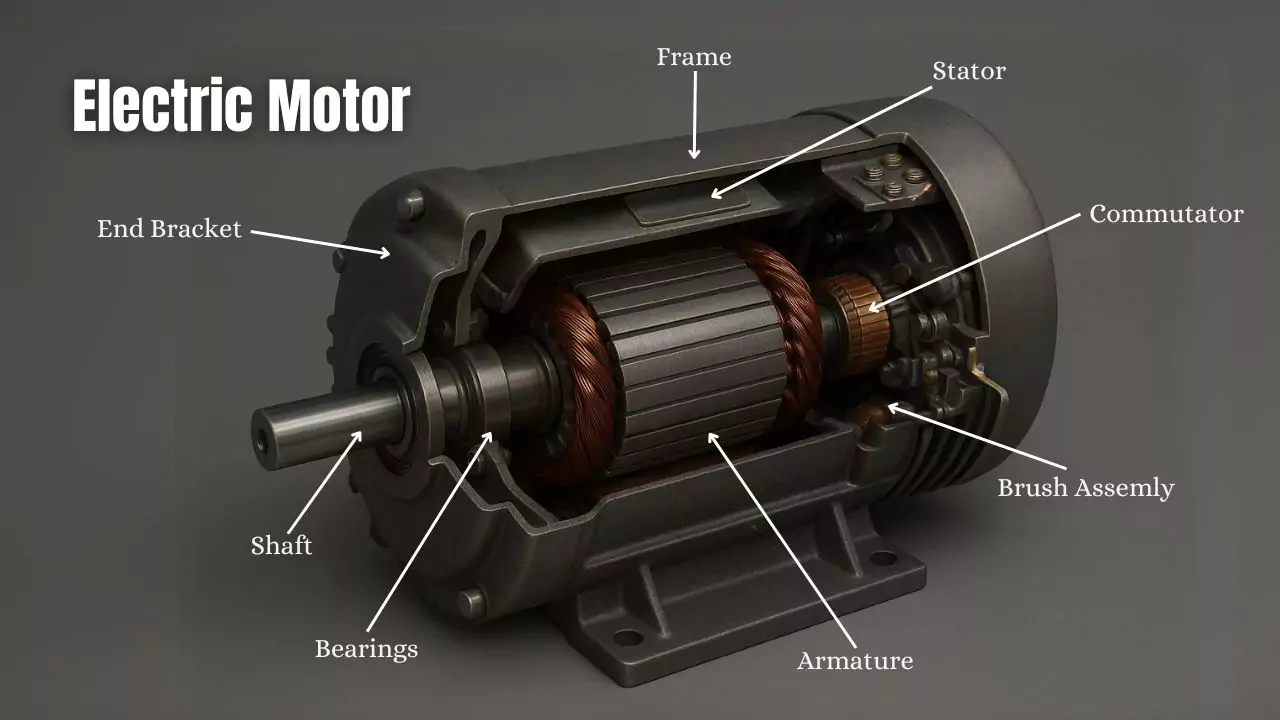
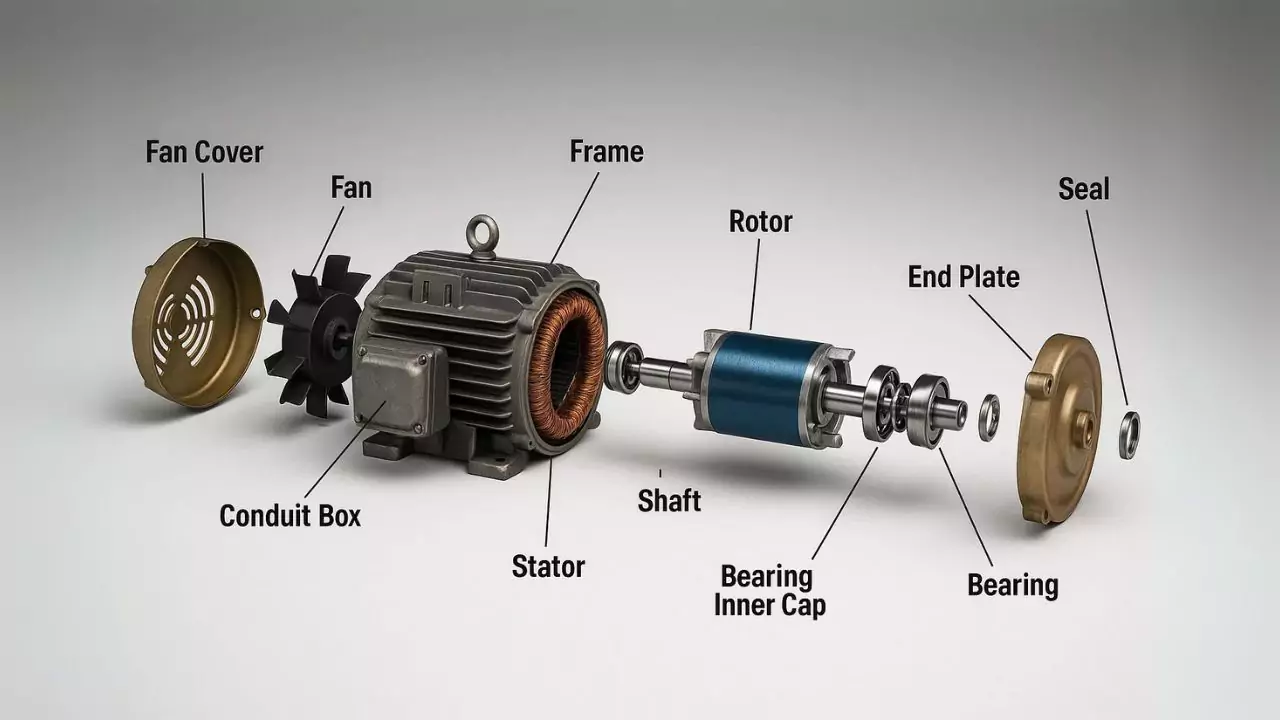
Systems (Examples)
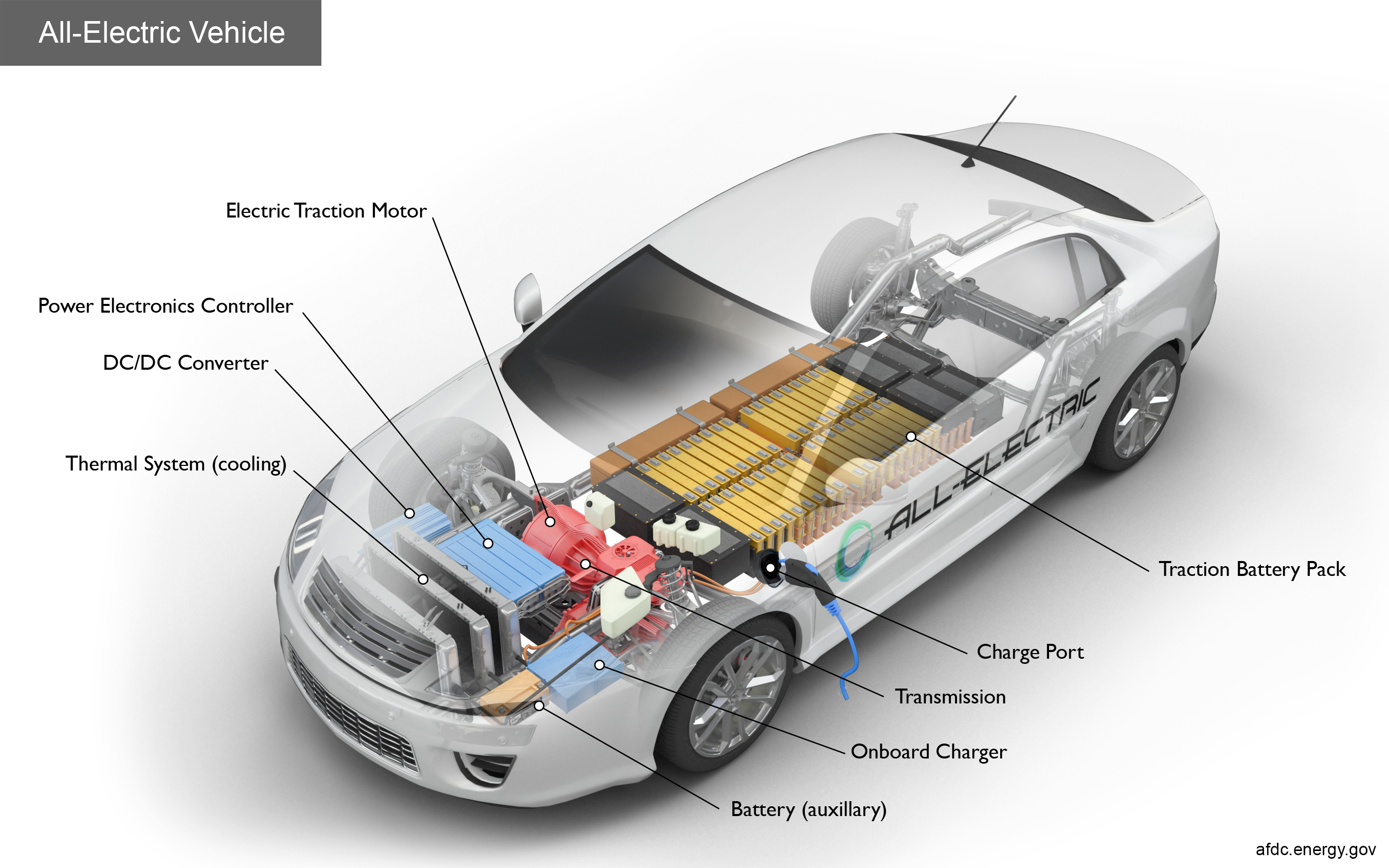
Systems (Examples)
Continuous-Time (CT) vs. Discrete-Time (DT) Systems
Systems are classified based on the nature of their input and output signals.
Continuous-Time Systems
- Input \(x(t)\) and output \(y(t)\) are continuous functions of time.
- Represented by: \(x(t) \rightarrow y(t)\)
Real-world examples:
- Analog filters
- Mechanical systems
- Electrical circuits (e.g., op-amp circuits)
Discrete-Time Systems
- Input \(x[n]\) and output \(y[n]\) are sequences (defined at discrete instants).
- Represented by: \(x[n] \rightarrow y[n]\)
Real-world examples:
- Digital signal processors (DSPs)
- Computer algorithms
- Financial modeling (e.g., monthly balances)
Simple Examples of Systems: Continuous-Time (1/2)
Many diverse physical systems can share the same mathematical description.
Example 1.8: RC Circuit Voltage
System: An RC circuit where \(v_s(t)\) is the input voltage and \(v_c(t)\) is the output voltage across the capacitor.
Input-Output Relationship (Differential Equation): \[ \frac{d v_{c}(t)}{d t}+\frac{1}{R C} v_{c}(t)=\frac{1}{R C} v_{s}(t) \quad \text{(Equation 1.82)} \]
Simple Examples of Systems: Continuous-Time (2/2)
Example 1.9: Automobile Velocity
System: An automobile where \(f(t)\) is the input force and \(v(t)\) is the output velocity. (Assumes mass \(m\) and friction \(\rho v\)).
Input-Output Relationship (Differential Equation): \[ \frac{d v(t)}{d t}+\frac{\rho}{m} v(t)=\frac{1}{m} f(t) \quad \text{(Equation 1.84)} \]
Simple Examples of Systems: Continuous-Time (2/2)
Comparison: Both Example 1.8 (RC circuit) and 1.9 (automobile) are described by the same general first-order linear differential equation:
\[ \frac{d y(t)}{d t}+a y(t)=b x(t) \quad \text{(Equation 1.85)} \]
- \(y(t)\): output signal, \(x(t)\): input signal.
- \(a\), \(b\): constants derived from system parameters.
Simple Examples of Systems: Discrete-Time (1/2)
Example 1.10: Bank Account Balance
System: A bank account where \(x[n]\) is the net deposit in month \(n\), and \(y[n]\) is the balance at the end of month \(n\). (Assumes 1% interest per month).
Input-Output Relationship (Difference Equation): \[ y[n] = 1.01 y[n-1] + x[n] \quad \text{(Equation 1.86)} \] \[ y[n] - 1.01 y[n-1] = x[n] \quad \text{(Equation 1.87)} \]
Simple Examples of Systems: Discrete-Time (1/2)
Example 1.10: Bank Account Balance
Interactive Simulation: Assume initial balance \(y[-1]=1000\) and a monthly deposit \(x[n]=100\) for \(n \ge 0\). The system calculates balance \(y[n]\) based on previous month’s balance and current deposit.
Simple Examples of Systems: Discrete-Time (2/2)
Example 1.11: Digital Simulation of Automobile Model
System: A discrete-time approximation of the continuous-time automobile model from Example 1.9. (Approximates \(\frac{dv(t)}{dt}\) with backward difference \(\frac{v(n\Delta)-v((n-1)\Delta)}{\Delta}\)).
Input-Output Relationship (Difference Equation): \[ v[n]-\frac{m}{(m+\rho \Delta)} v[n-1]=\frac{\Delta}{(m+\rho \Delta)} f[n] \quad \text{(Equation 1.88)} \]
- \(v[n]\): sampled velocity, \(f[n]\): sampled force.
- \(\Delta\): time step.
Simple Examples of Systems: Discrete-Time (2/2)
Comparison: Both Example 1.10 (bank account) and 1.11 (digital simulation) are described by the same general first-order linear difference equation:
\[ y[n]+a y[n-1]=b x[n] \quad \text{(Equation 1.89)} \]
- \(y[n]\): output sequence, \(x[n]\): input sequence.
- \(a\), \(b\): constants derived from system parameters or approximation schemes.
1.5.2 Interconnections of Systems
Complex systems are often built by interconnecting simpler subsystems.
- Benefit: Analyze complex systems by understanding their components and their connections.
- Application: Design and synthesize new systems from basic building blocks.
1.5.2 Interconnections of Systems
Real-World Application: Audio System
graph TD
    A[Radio Receiver] --> B(Amplifier);
    B --> C[Speakers];
An audio system cascaded for playback.
Real-World Application: Digitally Controlled Aircraft
graph TD
    Pilot[Pilot Commands] --> Autopilot(Digital Autopilot);
    Sensors --> Autopilot;
    Autopilot --> Actuators(Aircraft Actuators);
    Actuators --> Aircraft(Aircraft);
    Aircraft --> Sensors["Sensors (Velocity)"];
    Aircraft --> PilotsDisplay(Pilot Display);
    Autopilot --Desired--> Aircraft;
    Aircraft --Actual--> Autopilot;

    style Autopilot fill:#f9f
    style Aircraft fill:#cf9
    style Sensors fill:#9fc
    style Actuators fill:#c9f
A feedback system structure.
Basic Interconnections: Series (Cascade)
In a series or cascade interconnection, the output of one system becomes the input to the next.
graph LR
    input(Input) --> Sys1(System 1);
    Sys1 --> Sys2(System 2);
    Sys2 --> output(Output);

    subgraph Overall System
        Sys1
        Sys2
    end
- Description: Input signal is processed by System 1, then its output is processed by System 2.
- Example: A radio receiver (System 1) connected to an amplifier (System 2).
- Notation: If System 1 output = \(y_1\) and System 2 output = \(y_2\), then \(y_1 = \text{Sys1}(\text{input})\) and \(y_2 = \text{Sys2}(y_1)\).
Basic Interconnections: Parallel
In a parallel interconnection, the same input signal is applied to multiple systems, and their outputs are combined (typically summed).
graph LR
    input(Input) --> Sys1(System 1);
    input --> Sys2(System 2);
    Sys1 --> Sum;
    Sys2 --> Sum;
    Sum(($\oplus$)) --> output(Output);

    subgraph Overall System
        Sys1
        Sys2
        Sum
    end
- Description: Input simultaneously feeds System 1 and System 2. Their individual outputs are added together to form the overall output.
- Example: Multiple microphones (inputs) feeding into a mixing console (summing outputs) then to a single amplifier.
Basic Interconnections: Feedback
In a feedback interconnection, the output of a system (or subsystem) is fed back and used to influence its own input.
graph LR
    input(External Input) --> Summer;
    System2_out(Output of S2) --> Summer;
    Summer(($\oplus$)) --> System1(System 1);
    System1 --> System2(System 2);
    System2 --> output(Output);
    System2_out -- Feedback --> Summer;

    subgraph Overall System
        Summer
        System1
        System2
    end
- Description: The output of System 2 is added (or subtracted) from the external input, which then becomes the effective input to System 1.
- Examples:
- Cruise Control: Senses vehicle speed, adjusts engine to maintain desired speed.
- Thermostat: Senses room temperature, turns heating/cooling on/off to reach set temperature.
- Operational Amplifiers: Many op-amp circuits use feedback for stability and gain control.
Key Takeaways
System Definition
- Transforms
input signalsintooutput signals. - Can be continuous-time (\(x(t) \rightarrow y(t)\)) or discrete-time (\(x[n] \rightarrow y[n]\)).
Mathematical Models
- Continuous-time systems often described by differential equations.
- Discrete-time systems often described by difference equations.
- Many diverse physical systems share the same mathematical forms (e.g., first-order linear differential/difference equations).
Key Takeaways
System Interconnections
- Complex systems can be understood and built from simpler subsystems.
- Series (Cascade): Output of one system feeds the input of another.
- Parallel: Same input to multiple systems; outputs are combined.
- Feedback: Output of a system/subsystem is routed back to influence its input, crucial for control and stability.
Understanding these concepts is foundational for further study in Signals and Systems.