flowchart TD
    A["Identify Needs"] --> B("Joint Planning")
    B --> C("Implementation <br> (with local participation)")
    C --> D("Monitoring & <br> Evaluation")
    D --> E("Capacity Building <br> & Local Ownership")
    E --> F("Sustainability <br> & Replication")
    F --> A
Empowering Communities
KKN Guidelines
Imron Rosyadi
The Essence of KKN (Community Work): Village Empowerment
Community work is about empowering local communities, not just “fixing” problems.
It means enabling them to identify, address, and sustain their own development.
What is Village Empowerment?
- Holistic Development: Focus on various aspects like education, health, economy.
- Specific Community Focus: Understanding unique needs, culture, and governance structures.
- Local Ownership: Ensuring projects are driven and sustained by the community itself.
How We Empower:
- Introducing Technology/Innovation: Providing tools or methods to improve lives.
- Social Engineering: Facilitating behavioral change and community cohesion.
- Training & Education: Building skills and knowledge within the community.
- Production Tools/Infrastructure: Supplying resources for economic growth or improved living.
- Capital Access: Helping communities secure funding or micro-loans.
Setting SMART Program Goals
Effective community programs require clear, actionable objectives.
The SMART framework ensures your efforts are focused and measurable.
SMART Principles
- Specific: Clearly define what you want to achieve.
- Measurable: Quantify your goals to track progress.
- Achievable: Set realistic and attainable targets.
- Relevant: Ensure goals align with community needs and your mission.
- Time-bound: Establish a deadline for completion.
Practical Application
- Clear Volumes: How many people, how many units, what scale?
- Defined Goals: What is the desired outcome?
- Schedules: Detailed timelines for activities.
- Outputs: Tangible results of your work (e.g., 5 training sessions, 1 new irrigation system).
- PICs (Person In Charge): Assign clear responsibilities for each task.
Tip
Example SMART Goal:
“Train 30 village youth in basic digital marketing skills within 3 months, leading to at least 5 new small businesses selling local products online.”
Engaging the Community & Ensuring Sustainability
Community participation is the heart of successful, sustainable projects.
Without their involvement, initiatives often fade after your departure.
Steps for Engagement
- Initial Consultation: Listen to their needs, not just tell them yours.
- Joint Planning: Involve community members in decision-making.
- Capacity Building: Train locals to manage and maintain projects.
- Resource Mobilization: Encourage community contributions (time, labor, local materials).
- Feedback Loops: Regularly gather input and adapt your approach.
Community Engagement Cycle
Effective Communication with the Community
Communication is more than just talking; it’s about understanding and connection. Tailoring your communication is key to building trust and cooperation.
- Respect Local Culture: Learn about customs, traditions, and social norms.
- Understand Community Structure: Identify leaders, elders, youth groups, and their influence.
- Use Appropriate Language: If possible, learn basic local phrases or use skilled translators.
- Active Listening: Give genuine attention to their concerns and ideas.
- Visual Aids: Use pictures, diagrams, or simple demonstrations for clarity.
- Be Patient and Consistent: Building trust takes time and repeated, honest interactions.
Note
Cultural Sensitivity is Paramount:
A gesture or phrase that is harmless in your culture could be offensive elsewhere. Always observe and ask respectfully if you are unsure.
Team Management for Community Projects
A well-structured and collaborative team is essential for success.
Clearly defined roles and shared responsibilities prevent overlap and enhance efficiency.
Key Team Roles (Examples)
- Project Lead: Overall strategy, external relations, problem-solving.
- Facilitator/Trainer: Leads workshops, coordinates local activities.
- Logistics Coordinator: Manages transport, materials, accommodation.
- Documentation Specialist: Records progress, collects data, prepares reports.
- Community Liaison: Primary point of contact with village members, cultural bridge.
- Financial Administrator: Manages budget, expenses, procurement.
Principles for Effective Teams
- Clear Roles & Responsibilities: Everyone knows their part.
- Regular Communication: Daily check-ins, weekly reviews.
- Mutual Support: Help each other out, celebrate successes.
- Conflict Resolution: Address disagreements constructively and promptly.
- Adaptability: Be ready to adjust plans based on field realities.
Leveraging Shared, Collaboration, Communication Tools
Modern tools can significantly streamline your project management and reporting. They enable real-time collaboration and secure information storage.
For Reporting & Documentation
- Google Docs: Collaborative document creation, real-time editing for reports, proposals, meeting minutes.
For Storage & Archiving
- Google Drive: Cloud storage for all project files (photos, videos, documents, data). Easy sharing and access control.
Communication Channels
- WhatsApp: Group chats, quick updates, sending photos/videos.
Tip
Pro Tip:
Before going to the field, download critical documents for offline access in case of internet unavailability.
Task & Workflow Management
Organizing tasks and tracking progress keeps the team on schedule and accountable.
Adopt a framework that suits your project’s complexity and team’s preference.
Common Frameworks
- Kanban Board: Visualizes workflow, tasks move through stages (To Do, In Progress, Done).
- Tools: Trello, physical whiteboard with sticky notes.
- Scrum Framework (Simplified): Iterative approach with short “sprints,” daily stand-ups, review meetings.
- Focus: Adaptability, rapid feedback.
- Gantt Chart: Project timeline showing tasks, dependencies, and progress over time.
- Tools: Google Sheets, physical paper.
Simple Kanban Workflow
graph LR
    A["Backlog: <br> Ideas & To-Dos"] --> B{"To Do: <br> Ready for Work"}
    B --> C{"In Progress: <br> Currently Working"}
    C --> D{"Testing/Review: <br> Awaiting Feedback"}
    D --> E["Done: <br> Completed Tasks"]
Kanban in Action: Visualizing & Managing Flow
Kanban is a highly visual system for managing work. It helps teams see their workflow, limit work in progress, and focus on completion.
Core Principles for Community Work
- Visualize Workflow: Use a board (physical or digital) to show tasks from start to finish.
- Limit Work in Progress (WIP): Avoid starting too many things at once. Focus on finishing!
- Manage Flow: Track how tasks move. Where are the bottlenecks?
- Make Policies Explicit: Clearly define “done” for each stage.
- Improve Collaboratively: Regularly discuss what works and what doesn’t.
Practical Steps for Your Team
- Set up Your Board: Create columns: e.g., “Ideas/Backlog,” “To Do,” “Doing,” “Done.”
- Create Task Cards: Write each task on a separate card (sticky note or digital).
- Pull System: Only move a card to “Doing” when there’s capacity (respect WIP limits).
- Daily Check-ins: Briefly review the board: What’s stuck? What can we move forward?
- Focus on “Done”: The goal is to move cards to the “Done” column as quickly as possible.
Kanban Board

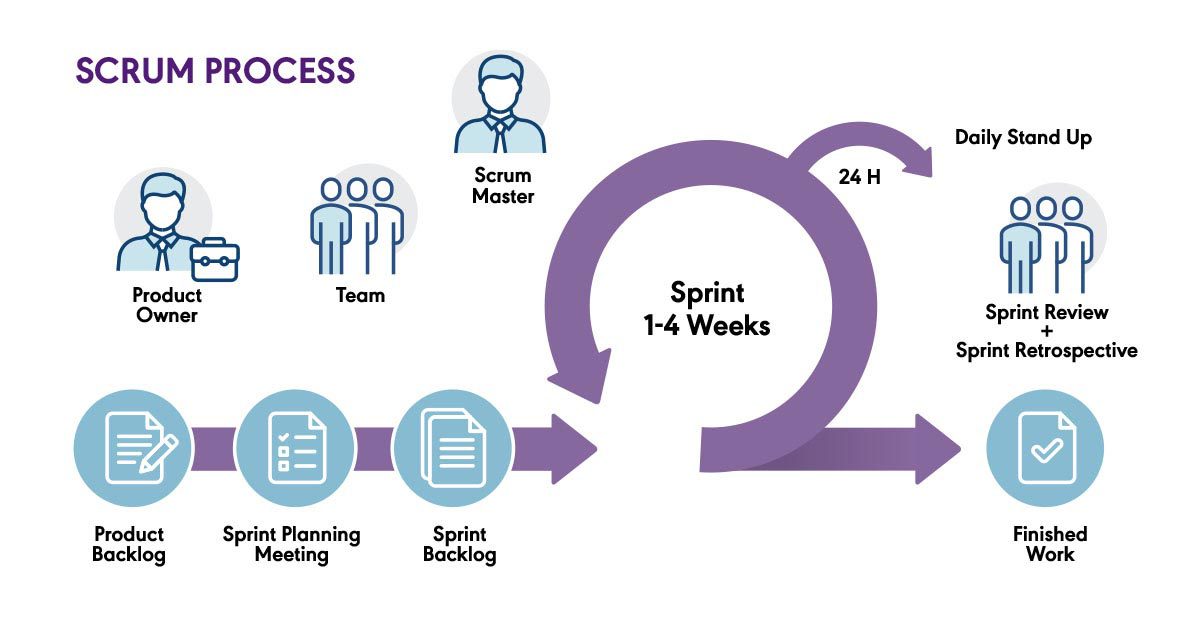
Simple SCRUM for Community Projects
SCRUM provides a structured, iterative approach, ideal for projects with evolving needs.
It emphasizes short work cycles, regular feedback, and team autonomy.
Simplified Roles
- Product Owner (Project Lead): Defines project goals, prioritizes tasks.
- Scrum Master (Team Facilitator): Helps the team follow SCRUM, removes obstacles, keeps meetings focused.
- Development Team (Project Team): Self-organizing group responsible for completing the work.
Key Activities (Ceremonies)
- Sprint Planning: At the start of each “Sprint” (e.g., 1 weeks), the team plans what to achieve.
- Daily Scrum (Stand-up): 15-minute daily meeting: What did I do yesterday? What will I do today? Any blockers?
- Sprint Review: At Sprint end, demonstrate completed work, gather feedback.
- Sprint Retrospective: Team reflects on the Sprint: What went well? What can we improve next time?
Note
Why Consider Simple SCRUM?
It’s excellent for projects where you need to adapt quickly based on community feedback.
The short Sprints allow for continuous learning and adjustment, reducing risks.
SCRUM Workflow
Anticipating Uncertainty: Preparing for the Unexpected
Community work often takes you into unpredictable environments.
Proactive planning for potential challenges is crucial.
- Weather Contingencies: Heavy rain, extreme heat, or floods can disrupt plans.
- Plan: Alternative indoor venues, rain gear, rescheduling protocols.
- Internet/Power Problems: Expect unreliable connectivity and electricity.
- Plan: Offline materials, power banks, printed copies, satellite communication options.
- Logistical Issues: Vehicle breakdowns, road closures, material delays.
- Plan: Backup transport, alternative routes, buffer time in schedules.
- Health & Safety: Minor injuries, illness, remote medical access.
- Plan: First aid kits, emergency contacts, knowledge of nearest health facilities.
Warning
“Expect the Unexpected”
Always have a Plan B (and maybe a Plan C). Being flexible and resourceful is a core skill in community engagement.
Handling Problems Effectively
Challenges are inevitable. How you respond defines your team’s resilience and professionalism.
Approach problems with empathy, clear protocols, and decisive action.
Addressing Common Issues
- Non-Participant Team Member:
- Action: Private conversation, understand reasons, re-assign tasks, escalate if persistent.
- Non-Supportive Community Members:
- Action: Active listening, engage key influencers, demonstrate project benefits, seek mediation.
- Project Delays:
- Action: Re-evaluate priorities, communicate with stakeholders, adjust timelines realistically.
Critical Issue: Sexual Harassment
Important
Zero Tolerance Policy:
Any form of sexual harassment (verbal, physical, visual) is unacceptable.
- Immediate Action: Ensure the victim’s safety.
- Clear Reporting: Establish a confidential reporting mechanism for both team members and community.
- Support: Provide support to the victim.
- Consequences: Implement appropriate disciplinary actions for the perpetrator. Your responsibility is to create a safe environment.
Common Field Challenges: What to Expect
Based on past experiences, teams often face a predictable set of hurdles. Being aware of these can help you identify and address them early.
1. Communication & Coordination
- Miscommunication: Mismatched information and misunderstandings.
- Poor Coordination: Overlapping schedules or disconnects with village officials.
- Leadership Gaps: Lack of firm direction, transparency, or routine briefings from the coordinator.
2. Task Management Disparities
- Unequal Workload: Some members carrying heavy burdens while others contribute minimally.
- Low Participation: Inactive members during field execution or planning.
- Conflicting Priorities: Clashing schedules between team programs and sudden village events.
3. Personalities & Emotional Dynamics
- Clash of Egos: Difficulties adapting to different work ethics or personalities.
- Unprofessional Behavior: Bringing personal moods into the team basecamp.
- Mental/Physical Fatigue: Exhaustion triggering unstable moods and tension.
- Initial Awkwardness: Lack of bonding during the early days.
4. External Factors
- Sudden Changes: Unexpected requests or invitations from the community.
- Community Dynamics: Navigating complex or sometimes difficult local group interactions.
Proven Solutions from Past Teams
How do successful teams overcome these hurdles? The key lies in combining structured forums with empathetic interpersonal approaches.
Formal Group Forums
- Open Discussions (Musyawarah): Sit down to align timelines and reach democratic compromises.
- Routine Evaluations: Hold nightly meetings or post-event reflections to plan the next day.
- Systematic Restructuring: Create clear task allocations and detailed targets to eliminate confusion.
- Initiating Briefings: Proactively set up pre-activity briefings so everyone knows their role.
Interpersonal Approaches
- “Deep-Talk” Sessions: Host dedicated heart-to-heart sessions to air out grievances honestly and respectfully.
- One-on-One Approach: Leaders reach out privately to struggling members without public shaming.
- Active Ice Breaking: Proactively break the ice early on to build trust.
- Fast Digital Coordination: Use quick calls or WhatsApp groups to resolve sudden information gaps.
Tip
Emotional Resilience is Key: Sometimes, the best solution is choosing not to take personal moods to heart and staying focused strictly on task completion while offering a supportive ear in private.
Summary: Navigating Team Dynamics
While community work teams face predictable hurdles—driven by poor communication, unequal workloads, and fatigue—the remedy is consistent.
- The Core Solution: Open, honest, and structured communication.
- Friction is Normal: Initial tension during a deployment is a natural part of team formation and community adaptation.
Note
The Ultimate Takeaway Teams that successfully navigate their internal conflicts emerge stronger, more cohesive, and highly adaptive. These challenges are actually your best opportunity for leadership and personal growth.
Personal Growth: Interpersonal Skills & Team Dynamics
Working in a high-pressure, diverse team environment is a crucible for personal and professional development.
Communication & Ego
- Active Listening: Learning to truly understand others, not just waiting for your turn to speak.
- Controlling the Ego: Setting personal pride aside to embrace compromise within a large team.
- Emotional Maturity: Discovering the true meaning of patience and managing emotions during stressful field challenges.
Collaboration & Organization
- Team Cohesion: Building a deep sense of solidarity, mutual support, and a “found family.”
- Structured Workflow: Realizing that success requires disciplined time management and fair labor division.
- Empathetic Leadership: Learning that effective leadership relies on personal approaches and understanding constraints, rather than formal reprimands.
Mastering Community & Social Dynamics
Engaging with a village requires shifting from an academic mindset to a practical, human-centered approach.
Empathy & Adaptation
- Translating Theory: Academic concepts must be simplified and adapted to the villagers’ daily realities and language.
- Cultural Humility: Developing deep respect for local customs, traditions, and ancestral beliefs to maintain harmony.
- Building Trust: Empowerment relies on informal, emotional bonds of trust, not just bureaucratic, formal meetings.
Agility & Problem-Solving
- Agility Over Rigidity: Even the best plans change instantly. Success requires staying calm and pivoting dynamically.
- Needs-Based Action: Projects must stem from the actual, verified needs of the villagers, not just forcing a “smart” idea onto them.
Tip
The Reality of Fieldwork:
If a sudden village event clashes with your meticulously planned workshop, the event wins. Adaptability is your greatest asset.
Professional Insights & Sustainable Impact
Beyond the 35 days, the KKN experience reshapes how you view development, society, and your own professional responsibility.
Sustainable Empowerment
- Beyond the Checklist: Moving from short-term “hit-and-run” activities to long-term, collaborative empowerment.
- Grassroots Ownership: True success means the community sustains the project long after you leave.
- Patience with Change: Changing habits (e.g., waste management) requires persistent, patient consistency, not overnight miracles.
Awareness & Resourcefulness
- The Power of Education: Witnessing firsthand how foundational education lifts the overall quality of society.
- Unlocking Potential: Realizing villages have massive, unoptimized natural resources lacking only technical expertise or modern tools.
- Professional Weight: Understanding that your competence and decisions carry real-world consequences for others.
The Ultimate Lesson: The Human Element
When all is said and done, the most profound realization from community service is this:
Important
The Human Element Supersedes Technical Planning
An impactful program relies minimally on the sheer brilliance of an idea, and maximally on empathy, adaptive communication, cultural humility, and emotional flexibility.
flowchart LR
    A["Theoretical <br> Academic Knowledge"] -->|"Empathy & <br> Cultural Humility"| B{"Community <br> Engagement"}
    B -->|"Emotional Flexibility <br> & Adaptation"| C["Practical <br> Social Wisdom"]

    style A fill:#e1bee7,stroke:#8e24aa,stroke-width:2px
    style B fill:#bbdefb,stroke:#1e88e5,stroke-width:2px
    style C fill:#c8e6c9,stroke:#43a047,stroke-width:2px
Conclusion: Making a Lasting Impact
Community work is a challenging yet profoundly rewarding experience.
Your dedication, preparation, and empathy can create a tangible, positive change.
- Be Prepared: Plan meticulously, but be ready to adapt.
- Engage Deeply: Build genuine relationships with the community.
- Communicate Clearly: Ensure mutual understanding and respect.
- Work as a Team: Support each other and share responsibilities.
- Stay Resilient: Problems are opportunities for learning and growth.
Thank you for your commitment to empowering communities!