By the end of this session, you should be able to:
Distinguish between solid, liquid, and gas flow measurements in industrial systems.
Explain how conveyor‑belt solid‑flow sensors work and compute mass flow from basic measurements.
Define and convert between common liquid flow units: volume flow, velocity, and mass/weight flow.
Describe and apply the restriction (differential‑pressure) method for measuring liquid flow in pipes.
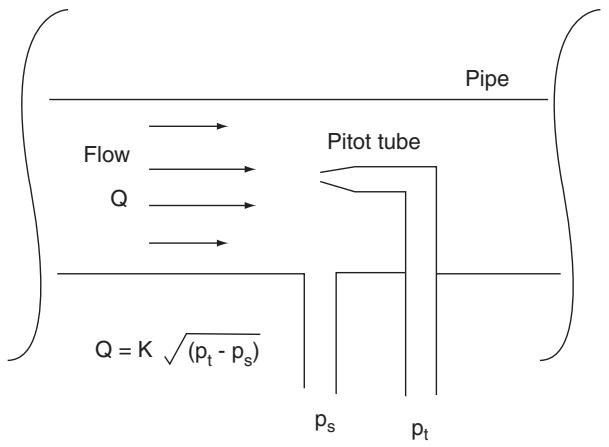
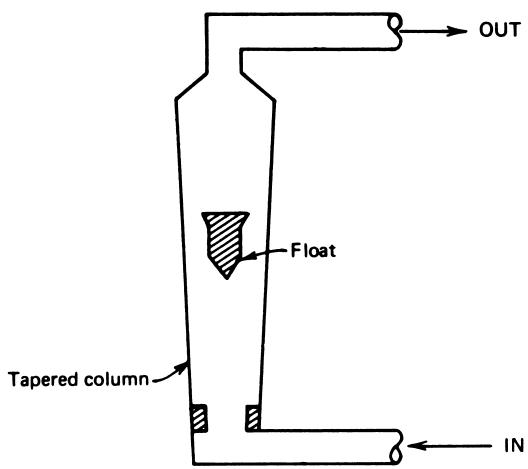
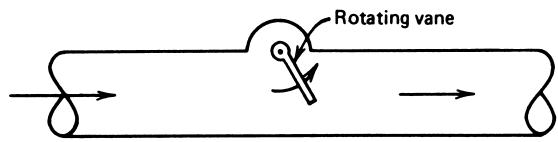
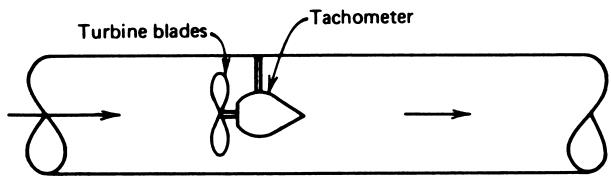
Explain how pitot tubes, obstruction meters (rotameter, vane, turbine), and magnetic flow meters operate.
Relate the physical sensor outputs (load cell, LVDT, DP cell, etc.) to electrical signals for use in control systems.
Why Flow Measurement Matters in ECE & Industry
Process industries run on moving material:
Crude oil in pipelines
Cooling water in power plants
Slurries in mineral processing
Air/fuel in automotive engines
Control goals often expressed in terms of flow:
Maintain \(150\ \mathrm{gal/min}\) of cooling water
Keep blood flow in a medical pump within safe limits
Deliver accurate fuel mass flow to an engine cylinder
For ECE:
Sensors → signal conditioning → data acquisition → digital control systems
Important
Flow is rarely measured “directly.” It is usually inferred from another measurable quantity such as weight, velocity, pressure drop, rotation speed, or induced voltage.
Three Broad Flow Categories
Solid flow
Discrete items (cars on an assembly line)
Granular solids or powders on conveyors (coal, grain, cement, pellets)
Liquid flow
Water, oils, chemicals in pipes and channels
Gas flow
Air, natural gas, exhaust gases, compressed air
We will focus on:
Solid‑flow on conveyors.
Liquid flow in pipes, including several sensor types.
6.1 Solid‑Flow Measurement: Conveyor Systems
Solid material can flow in several ways:
On conveyor belts (crushed ore, coal, packaged products).
Suspended as particles in a liquid host, forming a slurry (treated as liquid flow).
For conveyors with granular solids or powders, we are typically interested in mass (or weight) flow rate:
kg/min, kg/h
lb/min, lb/h
Key idea:
Measure how much mass is on a known length of conveyor, and use belt speed to compute mass flow per unit time.
\(W\) — weight of material on a section of belt of length \(L\) (kg or lb)
\(R\) — belt speed (m/min or ft/min)
\(L\) — length of weighing platform (m or ft)
\(Q\) — flow (kg/min or lb/min)
Formula
\[
Q = \frac{W R}{L} \tag{34}
\]
Interpretation:
\(W/L\) = weight per unit length of belt.
Multiply by \(R\) (length per unit time) → weight per unit time.
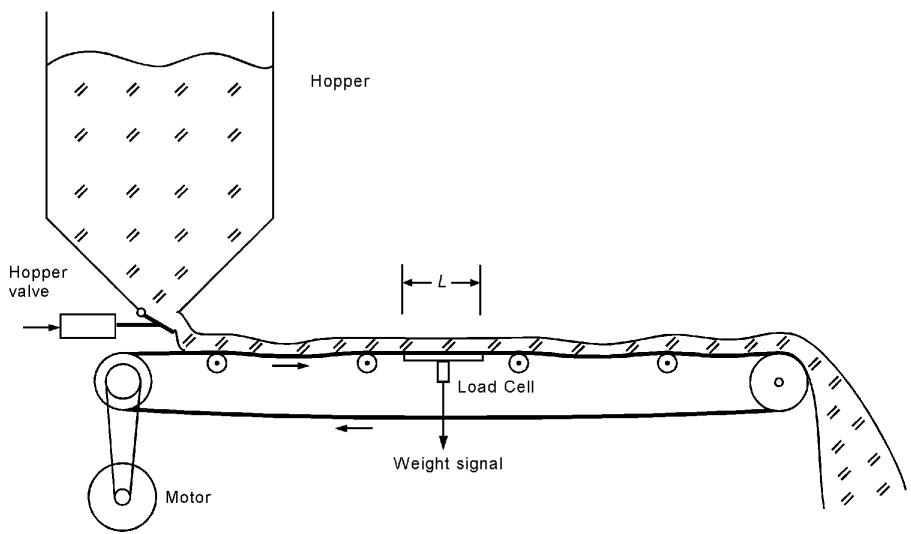
Figure 37 Conveyor system for solid-flow measurement.
Conveyor Flow: Sensor Implementation
The “flow sensor” is a system:
Hopper + valve (controls how much falls on the belt).
Conveyor with known speed \(R\).
Weighing platform of length \(L\).
The transducer on the platform:
Load cell (strain gauge) → measures deflection due to weight.
Or LVDT → measures displacement (droop) of the belt.
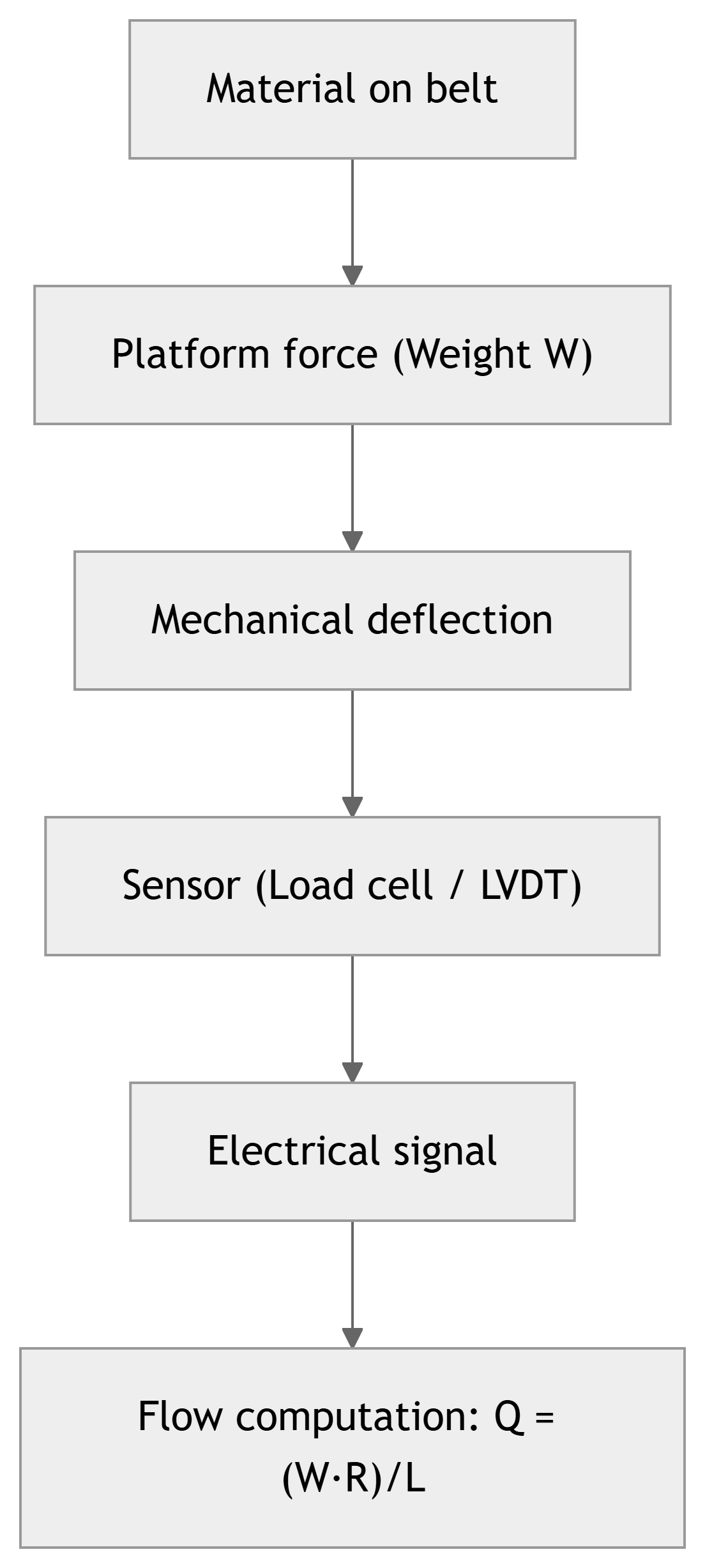
Signal chain:
Example 18 – Coal Conveyor Flow
A coal conveyor system moves at \(100\ \mathrm{ft/min}\). The weighing platform is \(5.0\ \mathrm{ft}\) long, and a particular weighing shows that \(75\ \mathrm{lb}\) of coal are on the platform.
Many fluid types (water, oil, corrosive chemicals, slurries).
Wide ranges of pressure, temperature, viscosity.
Different line sizes and materials.
We will cover basic ideas and common measurement approaches, not full fluid mechanics.
Common Liquid Flow Descriptions
Three primary ways to describe liquid flow:
Volume flow rate
Flow velocity
Mass or weight flow rate
Each is useful for different engineering tasks. ECE students should be comfortable converting among them, because sensors often measure one while the process cares about another.
Volume Flow Rate
Definition: volume delivered per unit time.
Typical units:
\(\mathrm{gal/min}\)
\(\mathrm{m^3/h}\)
\(\mathrm{ft^3/h}\)
Conversion:
\(1\ \mathrm{gal} = 231\ \mathrm{in^3}\)
Used when tank levels, mixing ratios, and pipeline capacities are more about how much volume per time than about mass.
Flow Velocity
Flow velocity \(V\) is how fast the fluid moves along the pipe:
Units: m/s, ft/s, m/min, ft/min.
Relationship to volume flow rate:
\[
V = \frac{Q}{A} \tag{35}
\]
Where:
\(V\) = flow velocity
\(Q\) = volume flow rate
\(A\) = cross‑sectional area of the pipe
Equivalently:
\[
Q = V A
\]
Note
For a given pipe size, measuring velocity is equivalent to measuring volume flow. Many flow sensors are fundamentally velocity sensors (pitot tube, turbine meter) that are then converted to volume flow using \(Q = V A\).
Mass or Weight Flow Rate
Mass/weight flow rate \(F\) is mass (or weight) per unit time:
Units: kg/h, kg/s, lb/h, lb/min.
Related to volume flow via fluid density:
\[
F = \rho Q \tag{36}
\]
Where:
\(F\) = mass or weight flow rate
\(\rho\) = mass or weight density (e.g., \(\mathrm{kg/m^3}\) or \(\mathrm{lb/ft^3}\))
\(Q\) = volume flow rate
When density is approximately constant (e.g., water at moderate temperatures), this relationship is straightforward.
Important
Control applications that care about energy or chemical reaction stoichiometry (e.g., fuel feed, reactant dosing) often need mass flow, not just volume flow.
Example 19 – From Velocity to Volume & Weight Flow
Water is pumped through a \(1.5\ \mathrm{in}\) diameter pipe with a flow velocity of \(2.5\ \mathrm{ft/s}\).
Given:
Pipe diameter \(d = 1.5\ \mathrm{in}\)
Velocity \(V = 2.5\ \mathrm{ft/s}\)
Water weight density \(\rho = 62.4\ \mathrm{lb/ft^3}\)
Find:
Volume flow rate \(Q\) in \(\mathrm{ft^3/min}\).
Weight flow rate \(F\) in \(\mathrm{lb/min}\).
Example 19 – Solution (Step 1: Cross‑Sectional Area)
Liquid flow in pipes is driven mainly by pressure difference:
Pressure can be expressed as head, \(h\), equivalent height of a liquid column.
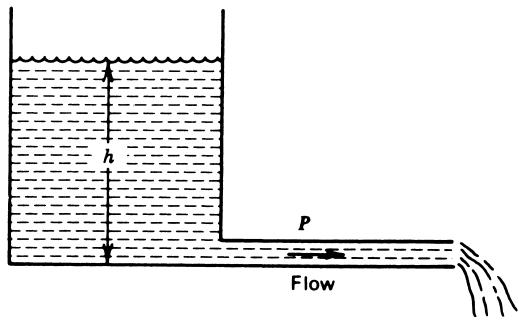
In a tank feeding a pipe at its bottom, head is the height \(h\) of the liquid above the outlet.
Figure 38 Flow through the pipe P is determined in part by the pressure due to the head h.
Many factors affect the actual flow rate:
Viscosity of liquid.
Pipe size and roughness.
Turbulence vs laminar flow.
Fittings, bends, valves, etc.
Our focus: How to measure flow, not to model all of these details.
Restriction Flow Sensors – Basic Principle
One of the most common liquid flow measurement methods:
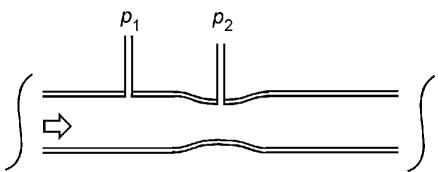
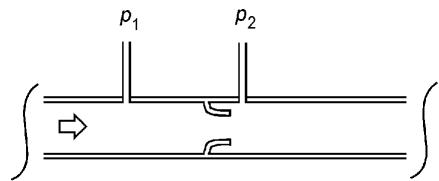
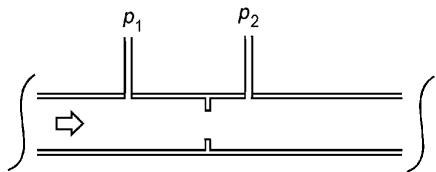
Insert a restriction in the pipe (venturi, nozzle, or orifice plate).
Flow speeds up through the restriction → static pressure drops.
Measure pressure drop\(\Delta p = p_1 - p_2\) across the restriction.
Empirically, we have:
\[
Q = K \sqrt{\Delta p} \tag{37}
\]
Where:
\(Q\) = volume flow rate.
\(\Delta p\) = pressure drop across restriction.
\(K\) = constant depending on liquid, pipe size, restriction geometry, temperature, etc.
Warning
Flow rate is proportional to the square root of pressure drop. Doubling \(\Delta p\) does not double \(Q\); it increases \(Q\) by \(\sqrt{2} \approx 1.414\).
Voltage range: approximately \(0.05\ \mathrm{V}\) to \(2.84\ \mathrm{V}\) for flows from \(20\) to \(150\ \mathrm{gal/min}\).
Tip
In practice, a transmitter or controller often linearizes the \(\sqrt{\Delta p}\) relationship so that its electrical output is more directly proportional to flow \(Q\).
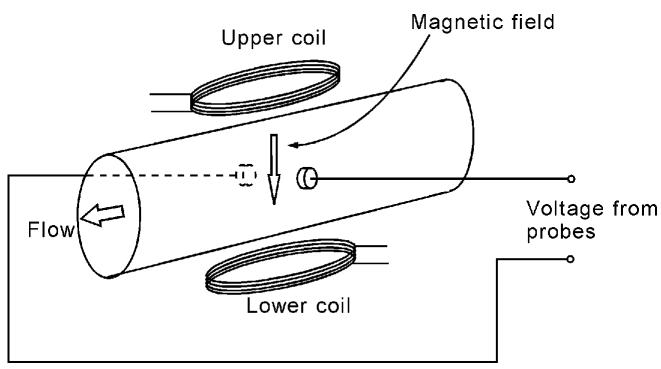
If a conductive fluid moves through a magnetic field \(\vec{B}\), charges experience a Lorentz force.
This induces a voltage across the pipe, perpendicular to both \(\vec{B}\) and the velocity \(\vec{V}\).
Magnitude of induced voltage \(E\) is proportional to flow velocity:
\[
E \propto B L V
\]
where \(L\) is distance between electrodes.
Because pipe cross‑section is fixed, \(V \propto Q\), so:
\[
E \propto Q
\]
Key design requirements:
Pipe and liner must be nonconductive, so current cannot short the induced voltage.
Fluid itself must be conductive (e.g., blood, salt water, many slurries).
Note
Magnetic flow meters are non‑intrusive: no moving parts, minimal pressure drop, and the flow tube can be full bore. Ideal for dirty or corrosive fluids, and even biological flows like blood (as noted in the figure caption).
Summary / Key Points
Solid flow on conveyors
Flow \(Q\) (mass/time) computed as \(Q = \dfrac{W R}{L}\).
Flow measurement becomes weight measurement via load cells or LVDTs.
Liquid flow
Described via volume flow rate \(Q\), velocity \(V\), and mass/weight flow rate \(F\).